Why an integrated approach creates lasting value
Connecting development, engineering, construction and operations makes energy infrastructure more resilient over time.
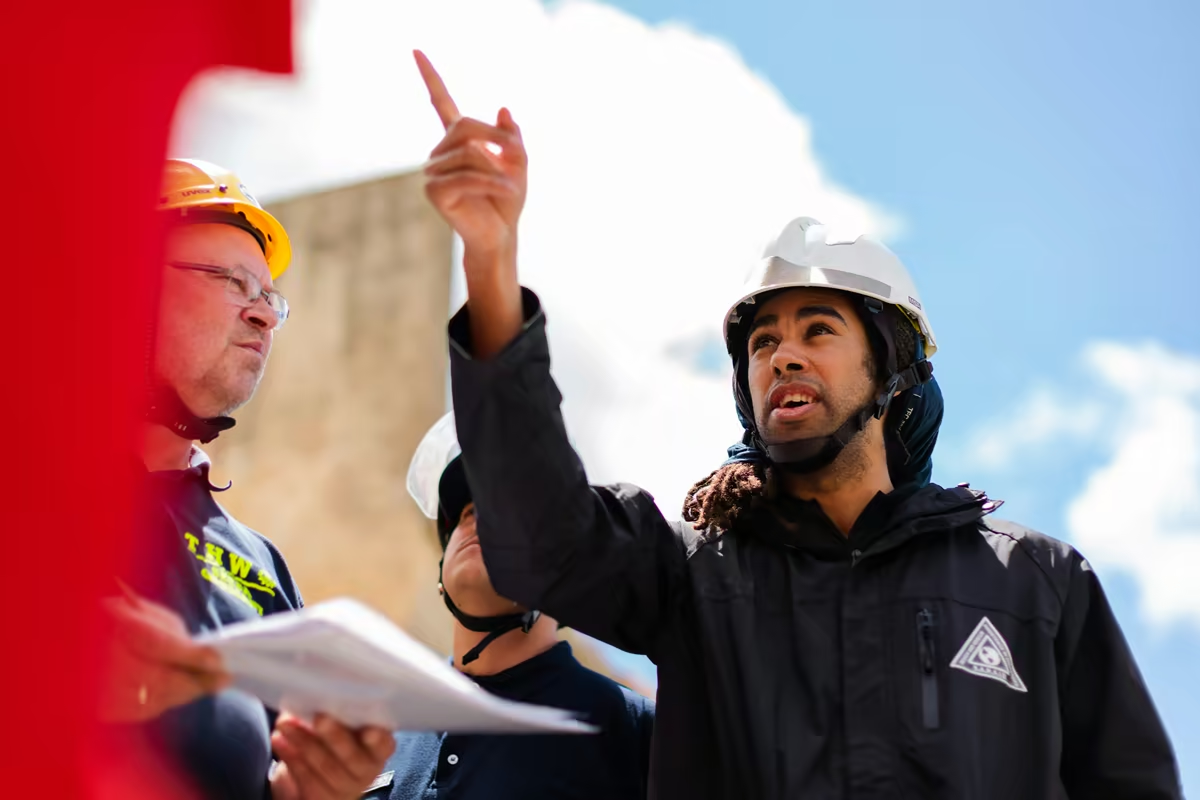
Renewable-energy projects move through many disciplines, decisions and stakeholders. When each phase is managed in isolation, knowledge is lost at the handover points. An integrated approach keeps that knowledge active from the first site assessment to long-term operations.
One project, one line of sight
Development choices influence engineering. Engineering choices shape procurement and construction. Those decisions, in turn, determine how efficiently an asset can be operated and maintained.
Maintaining a clear line of sight across the complete lifecycle allows teams to test decisions against the same objectives: technical quality, financial resilience, buildability and durable performance.
Fewer gaps between phases
Continuity improves both speed and control. Potential constraints can be surfaced while there is still time to respond, responsibilities remain clear, and the reasoning behind key decisions stays accessible to everyone involved.
This does not remove complexity. It gives complexity a structure.
Thinking beyond delivery
The strongest projects are designed with operation already in mind. Access, component selection, monitoring and maintenance strategy should inform the design rather than being added after construction.
By connecting specialist expertise around a shared plan, an integrated partner helps turn a sequence of technical phases into one coherent investment.